Hunting Seasons in Denmark – Complete Guide to Danish Hunting Seasons

Hunting seasons are one of the first things any hunter must understand before the hunt begins. It is not enough to know that a species is generally huntable in Denmark. The hunting season may depend on the species, sex, age, geographical area and, in some cases, also on the specific method of hunting or time of day. Therefore, hunting seasons should always be checked for the area where the hunt is actually going to take place.
This guide provides a comprehensive overview of the general Danish hunting seasons and explains why local hunting seasons are so important. The information is up to date according to the current hunting season executive order as of September 2026. Rules change continuously, so always check the current executive order before hunting.
What is a hunting season?
A hunting season is the period during which a particular game species may be legally hunted. Outside the designated hunting season, the species is protected. If no hunting season has been established for a species, the default is that it is protected all year round.
This means that the hunter must not only know the species but also be sure that the specific animal belongs to the category that is huntable. For deer game, there may, for example, be different hunting seasons for red deer, hind, buck, roe, calf and lamb. It also applies that local rules can significantly change the general hunting season.
General hunting seasons for deer game and other hoofed game
The general hunting seasons are the natural starting point, but especially for red deer, fallow deer and roe deer, you must be aware of local exceptions.
| Game species | General hunting season |
|---|---|
| Red deer larger than roe deer | 16 October – 31 December |
| Roe deer | 1 September – 31 January |
| Hind | 1 October – 31 January |
| Calf | 1 September – 29 February |
| Fallow deer | 1 September – 31 January |
| Fallow deer and calf | 1 October – 31 January |
| Sika deer | 1 September – 31 January |
| Sika hind and calf | 1 October – 31 January |
| Roe buck | 16 May – 15 July and 1 October – 31 January |
| Roe and lamb | 1 October – 31 January |
| Mouflon ram | 1 September – 31 January |
| Mouflon sheep and lamb | 1 October – 31 January |
| Wild boar, boar | 1 September – 31 January |
| Wild boar, sow and piglet | 1 October – 31 January |
It is particularly important to note that the general seasons are not necessarily the seasons that apply in your hunting area. Red deer game is the clearest example. There are a long series of regional hunting seasons with different requirements for, among other things, the size of the deer and the number of tines.
Hunting season for roe deer
The roe buck has a separate spring hunt from 16 May to 15 July. After that, there is a break during the roe deer's primary rutting period, and the general hunting season opens again on 1 October. From 1 October, both roe buck, roe and lamb are generally huntable until 31 January.
However, local hunting seasons can be significantly shorter. On some islands, the roe deer hunt is limited to very short periods, and in some places, there is no hunting season. This makes it necessary to look up the specific area in the hunting season executive order rather than relying solely on the nationwide general rule.
Hunting season for red deer game
Red deer game has some of the most complex hunting seasons in Denmark. The general rule distinguishes between red deer larger than roe deer, roe deer, hind and calf, but these seasons are deviated from in a long series of geographical areas.
The purpose of local hunting seasons is, among other things, to support the regional management of red deer game. In some areas, only deer with a certain minimum number of tines may be hunted. In other places, larger deer are protected, while roe deer and calves have a hunting season. Therefore, you should never go red deer hunting relying solely on the general hunting seasons.
Before the hunt, you should check both the specific geographical boundaries and the category of red deer game you wish to hunt.
Hunting season for fallow deer game
The general hunting season for fallow deer is 1 September to 31 January, while fallow deer and calf can generally be hunted from 1 October to 31 January.
Local hunting seasons also exist for fallow deer game. In some locations, the hunting season may be significantly more limited or completely absent for certain categories. This is due to large regional differences in the size of the population and management objectives.
Hunting season for fox, hare and wild rabbit
Fox has a general hunting season from 1 September to 31 January. On Bornholm, according to the current local rules, there is no general hunting season for fox.
Hare has a general hunting season from 1 November to 31 January, but several regional and local exceptions apply. In some parts of the country, the period is shorter, and on some islands, there is no hunting season.
Wild rabbit has a general hunting season from 1 November to 31 January.
Hunting seasons for ducks and geese
Waterfowl hunting requires special attention because both species, location and time of day can play a role.
The general hunting seasons include the following:
- Mallard, wood duck, gadwall, pintail, teal, scaup and wigeon: 1 September – 31 December, with additional hunting in the fishing territory in January according to the current rules.
- Greylag goose: 1 September – 31 January.
- Bluethroat goose: 1 September – 31 January.
- Bean goose: 1 September – 31 January.
- Canada goose: 1 September – 31 January.
- Common shelduck, scoter and merganser: 1 October – 31 January.
- Eider duck, male: 1 October – 31 January, although in areas where there is no hunting season.
- Black duck: 1 October – 31 January.
Common eider does not have a general hunting season, but there is a local hunting season in parts of South Zealand and Lolland-Falster.
Special August hunt for greylag goose and Canada goose
Greylag goose and Canada goose can be hunted under certain conditions on agricultural land or in immediate connection with it from 1 August to 31 August. At the same time, a distance restriction applies in relation to the coastline, fjord and larger lakes. The rule is therefore not a general August hunt everywhere in the landscape.
It is a good example of why short searches such as “greylag goose hunting season” can be insufficient. The specific hunting situation determines which rule applies.
Hunting seasons for pheasant, grey partridge and woodcock
Pheasant has a general hunting season from 1 October to 31 January. Locally, shorter periods or differences between cock and hen may apply.
Grey partridge has a general hunting season from 16 September to 31 October, but in several regions, the period is shorter. On some islands, the species has no hunting season at all.
Woodcock has a general hunting season from 1 October to 31 January.
Hunting seasons for woodcock and European snipe
Woodcock has a general hunting season from 1 October to 31 January. There are local restrictions, among other things on some islands and areas.
European snipe has a general hunting season from 1 September to 31 December.
Hunting season for ring-necked pheasant
Ring-necked pheasant has a general hunting season from 11 November to 31 January. It is worth being aware of because many older hunting season tables online show earlier periods that are no longer valid.
Hunting seasons for corvids
Common jackdaw, carrion crow and hooded crow have a general hunting season from 1 September to 31 January.
These species also have a special rule about the time of day: they may be hunted from one hour before sunrise to sunset, whereas ordinary hunting otherwise generally takes place between sunrise and sunset.
Hunting seasons for invasive species
A number of invasive species have a general hunting season from 1 September to 31 January. This includes, among others, nilgai, nutria, muskrat, badger, polecat and mink.
For invasive species, there may also be opportunities for management outside the general hunting season. Management is legally something different from ordinary hunting and may be linked to special conditions or permits. Therefore, management rules should not be mixed up with the hunting season overview.
What time of day can you hunt?
As a general rule, hunting may take place between sunrise and sunset.
However, there are important exceptions. Ducks and geese may be hunted from half an hour before sunrise to half an hour after sunset. Common jackdaw, carrion crow and hooded crow may be hunted from one hour before sunrise to sunset. For red deer game, there are also areas with local rules about extended hunting seasons around sunrise and sunset.
It is therefore not enough to only know the date. For some types of hunting, you must also know the precise legal time of day.
What are local hunting seasons?
Local hunting seasons are exceptions to the general hunting seasons. They may apply to an entire region, municipality, island or more closely defined geographical area.
The local rules are especially extensive for red deer game and fallow deer game, but also exist for roe deer, hare, pheasant, grey partridge, woodcock, common eider, silver gull and other species.
In practice, this means that two hunters a few kilometers apart in some cases can be subject to different hunting seasons.
How to check the hunting season before the hunt
A good routine is to check the hunting season every time a new season begins – even if you have hunted the same species for many years. Rules can change, and local boundaries can be difficult to remember correctly.
Start by identifying the precise species and category. Then check the general hunting season. Finally, check whether the hunting area is in an area with local hunting seasons.
For red deer and fallow deer game, this should be a fixed part of the preparation before every hunt. The same applies to hunting on islands and in areas where you do not normally hunt.
Why do hunting seasons change?
Hunting seasons are a management tool. They are established, among other things, with regard to population development, breeding periods, migration patterns, international nature conservation rules and local management needs.
A species can therefore get a shorter or longer hunting season, or the hunting season can be removed entirely if the biological or management situation changes.
For deer game, hunting seasons can also be used to control the composition of the harvest. This is one of the reasons why in some places there is a distinction between roe deer, larger deer, hind and calf.
Are hunting season and management the same?
No. Ordinary hunting takes place within a designated hunting season. Management has a different purpose and takes place according to separate rules, for example to prevent specific damage.
Therefore, the fact that a species has no hunting season does not necessarily mean that it can never be managed. Conversely, a management opportunity does not give the right to ordinary hunting outside the hunting season.
It is important to keep the two sets of rules separate.
How to use a hunting season overview correctly
A hunting season overview is a practical starting point, but it should not be used as the only check before the hunt. The legal reality can consist of both general hunting seasons, local hunting seasons and special rules for certain areas or methods of hunting.
Therefore, start by identifying the species and the category the animal belongs to. For deer game, sex and age can be important. Then check the local location. A hunting area in North Jutland may be subject to different provisions than an area on Zealand.
Finally, you should check whether special conditions apply to the type of hunting you want to use. This includes, for example, rules about time of day, distances, motorboats, wetlands or certain types of land.
The safe workflow is therefore: species, category, area and type of hunting.
No hunting season is not the same as management
If a species does not have a general hunting season, it does not automatically mean that it may never be harvested. Management is a different set of rules than ordinary hunting and can in certain situations take place according to special provisions or permits.
The opposite also applies: That a species can be managed under certain circumstances does not mean that it can be freely hunted outside the hunting season.
It is therefore important to distinguish between ordinary hunting and management, especially when searching for information online. A short overview that simply writes “may be shot” can hide crucial conditions.
Hunting seasons change – do not save old tables as the final word
Hunting seasons are not natural constants. They are established politically and managerially and can change when new executive orders come into force. Local arrangements can also be adjusted.
Therefore, you should be careful with old screenshots, hunting calendars from previous seasons and posts on social media. They may have been correct when they were written, but be outdated today.
If you use this article as a planning tool, always check the current executive order and official hunting season overview immediately before the hunt. This is especially relevant for deer game, geese and species with local exceptions.
Plan the hunting season according to more than the dates
The hunting season tells you when a species may be hunted, but it does not necessarily tell you when the hunt is best or most appropriate in your area. Weather, food, breeding success, population size and local management objectives can be at least as important.
A good hunting year is therefore planned by combining the legal framework with observations from the field. Record what you see throughout the year, and compare it with the harvest. In this way, the hunting table becomes a legal foundation, while the concrete hunt is managed by knowledge of the population.
This is especially valuable for deer game, where a responsible harvest plan can be more restrictive than the period the law allows.
Sunrise and sunset are part of the rules
Hunting season is not just about the date. For most species, hunting may generally take place from sunrise to sunset, while certain bird species have special time windows around sunrise and sunset.
Therefore, check the current times for the specific day and location. This is especially important in autumn and winter, where the length of the day changes quickly from week to week.
Frequently asked questions about hunting seasons
When does the buck hunt start?
The general spring hunt for roe buck starts on 16 May and lasts until and including 15 July. Local exceptions may apply.
When can you hunt roe and lamb?
The general hunting season for roe and lamb is 1 October to 31 January, but there are local deviations.
When can you shoot greylag goose?
The general hunting season is 1 September to 31 January. In addition, there is a special August rule on agricultural land and in immediate connection with it, if the conditions are met.
When can you hunt red deer?
It depends largely on the area and the category of the deer. The general hunting season for red deer larger than roe deer is 16 October to 31 December, but local hunting seasons deviate from this rule in many places.
Can you hunt after sunset?
As a general rule, no. Ducks and geese have extended time periods around sunrise and sunset, and there are special local rules for red deer game.
Where can you find the official hunting seasons?
The current hunting seasons are found in the hunting season executive order on Retsinformation. It is the official executive order that should be checked if there is any doubt.
Hunting seasons must always be checked before the hunt
Hunting seasons immediately seem like a simple question of dates, but in practice, there are many exceptions. This applies especially to deer game and local populations, where management varies from area to area.
Therefore, use a hunting season overview as a first orientation – not as a replacement for checking the current rules for your specific hunting area. This leads to both a more responsible hunt and reduces the risk of acting on an old or imprecise hunting season.
Relevant equipment for observation and hunting
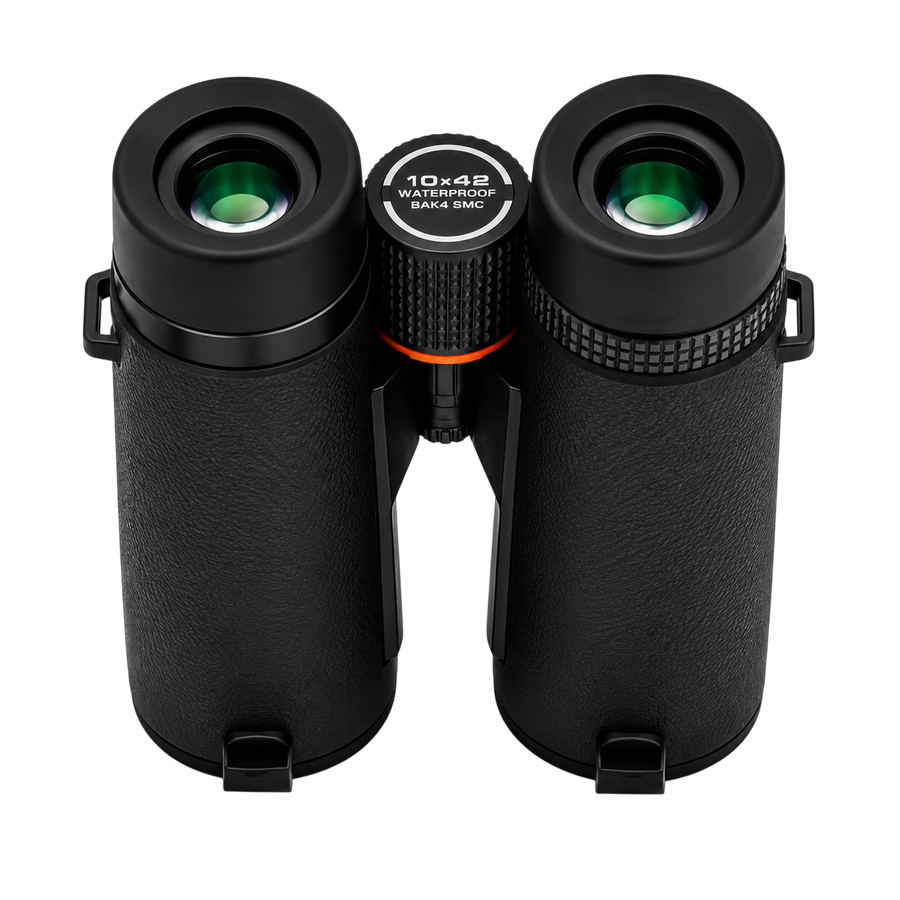
If you want to observe and identify game from a distance, you can see our binoculars for hunting and laser rangefinder. To monitor activity in the area when you are not present yourself, you will find our game cameras. If you are unsure about model selection, you can also read our guides to 10×42 vs. 10×50 vs. 12×50 and choosing a HuntLive camera.